

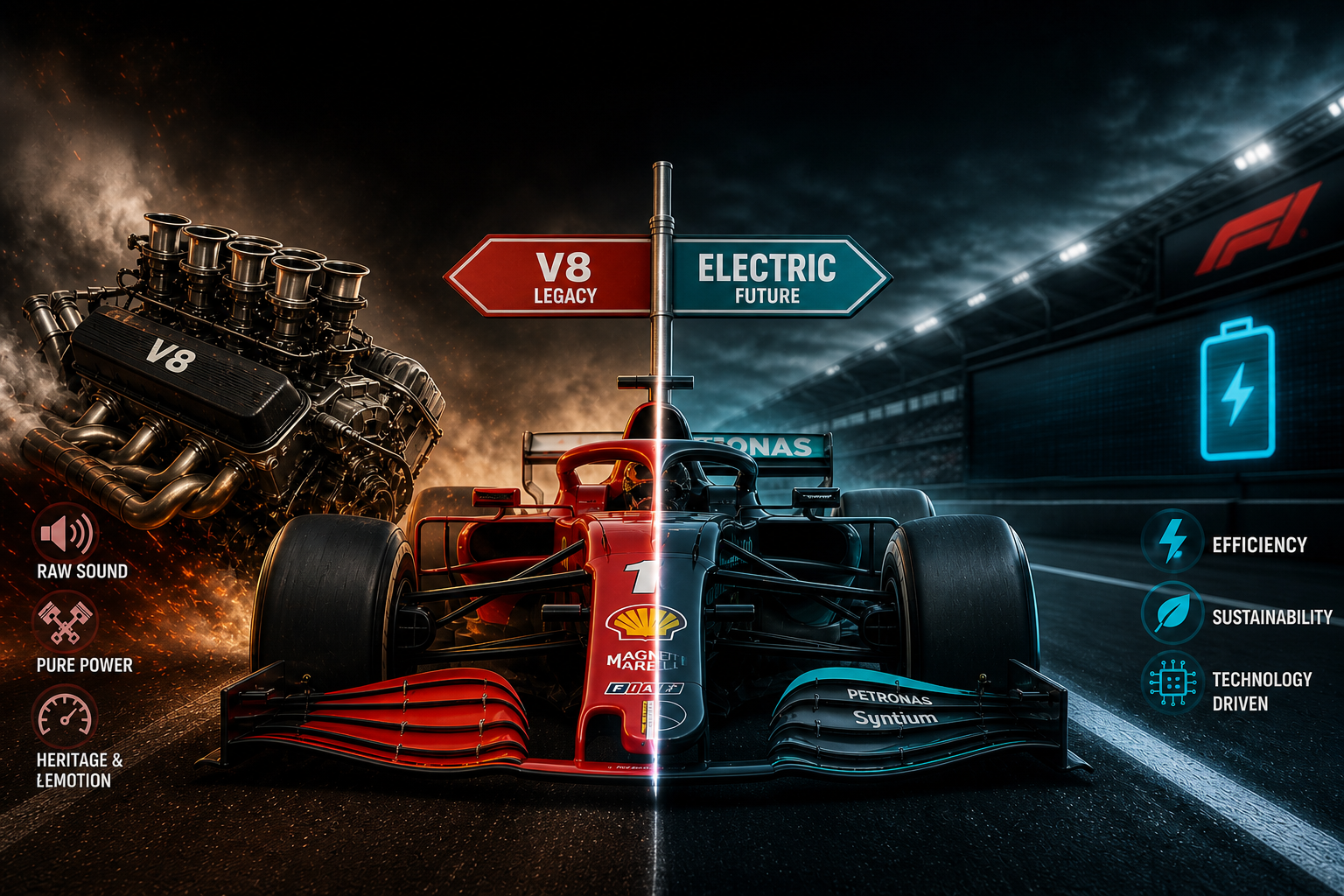
Formula 1 has always stood at the intersection of speed, innovation, and engineering excellence. For decades, the sport has evolved alongside the automotive industry, adopting cutting-edge technologies that shape the future of mobility. However, the latest discussions surrounding a potential return to V8 engines suggest that Formula 1 may be rethinking its current direction.
After years of pushing toward electrification and hybrid efficiency, the sport now faces a critical question: has it gone too far?
The idea of bringing back V8 engines is no longer just nostalgic speculation. It has become a serious topic among decision-makers, engineers, drivers, and fans. If implemented, this move could redefine the identity of Formula 1 once again, balancing technological progress with the raw excitement that originally defined the sport.
The Evolution of Formula 1 Engines
To understand the significance of a potential return to V8 engines, it is essential to look at how Formula 1 engines have evolved.
Before 2014, Formula 1 relied on naturally aspirated V8 engines. These engines were powerful, relatively simple, and most importantly, emotionally engaging. Their high-revving sound became synonymous with the sport itself.
However, in 2014, Formula 1 introduced V6 turbo-hybrid power units. This shift aimed to align the sport with global trends in energy efficiency and environmental responsibility.
The hybrid era brought several advantages:
- Improved fuel efficiency
- Lower carbon emissions
- Stronger relevance to road car technology
Despite these benefits, the transition also introduced new challenges:
- Increased technical complexity
- Higher development costs
- Reduced auditory excitement
Over time, criticism has grown as the balance between innovation and entertainment began to shift.
The 2026 Regulations: Ambitious but Controversial
The 2026 regulations were designed to mark a new era for Formula 1. One of the most significant changes is the increased reliance on electrical power, with energy output expected to be split more evenly between the internal combustion engine and electric systems.
On paper, this represents a bold and forward-thinking step. Formula 1 aims to lead the way in sustainable motorsport technology. However, real-world concerns have started to emerge.
Some of the key issues include:
- Heavy dependence on energy management
- Limitations in battery performance during races
- Reduced ability for drivers to push at maximum speed consistently
As a result, races are becoming increasingly strategic rather than purely competitive. Energy conservation often takes priority over aggressive driving, which changes the fundamental nature of the sport.
Driver Concerns: Losing the Essence of Racing
Drivers are among the most affected by these changes. Many have expressed concerns that the current direction of Formula 1 limits their ability to perform at their peak.
Instead of focusing solely on speed and skill, drivers must constantly manage:
- Battery usage
- Energy deployment timing
- Efficiency targets throughout the race
This shift creates a different type of competition, one that relies as much on systems management as it does on driving talent.
In traditional Formula 1 racing, drivers could push “flat-out” for extended periods. Today, that approach is no longer sustainable under hybrid constraints. Consequently, some drivers feel that the sport is drifting away from its core identity.
Fan Perspective: A Shift in Emotional Connection
Fans have also voiced their concerns. One of the most frequently mentioned issues is the loss of the iconic engine sound.
V8 engines were known for their loud, high-pitched roar, an element that created a visceral connection between the sport and its audience. In contrast, modern hybrid engines produce a quieter, less dramatic sound.
However, the issue goes beyond acoustics. Many fans believe that:
- Races feel less intense
- Technical complexity makes the sport harder to follow
- Emotional engagement has declined
In a sport driven by spectacle and passion, these factors play a crucial role in maintaining global appeal.
FIA’s Position and the Push for Change
The President of the FIA, Mohammed Ben Sulayem, has openly supported discussions about simplifying engine regulations.
He has suggested that Formula 1 should consider reintroducing V8 engines in the future, potentially around 2030 or 2031. However, this would not be a simple return to the past.
Instead, the proposed concept includes:
- Sustainable fuels
- Reduced hybrid complexity
- Lighter overall car weight
The goal is to strike a balance between modern sustainability standards and the traditional appeal of Formula 1.
Why V8 Engines Still Matter
The renewed interest in Formula 1 V8 engines is not purely nostalgic. There are several practical advantages that make them a viable option in today’s context.
1. Simplicity and Cost Efficiency
V8 engines are significantly less complex than current hybrid systems. This could reduce development costs and make the sport more accessible to new teams.
2. Reduced Weight
Without large battery systems, cars could become lighter. This would improve handling, agility, and overall race dynamics.
3. Enhanced Racing Experience
Drivers would be able to push their cars more consistently, leading to more competitive and unpredictable races.
4. Stronger Emotional Appeal
The sound and feel of V8 engines contribute to a more immersive fan experience, which is essential for the sport’s long-term popularity.
Sustainability Challenges and Solutions
One of the biggest challenges in reintroducing V8 engines is maintaining Formula 1’s commitment to sustainability.
The sport has pledged to achieve net-zero carbon emissions by 2030. Therefore, any return to V8 engines must be accompanied by environmentally responsible innovations.
Potential solutions include:
- Advanced sustainable fuels
- Improved combustion efficiency
- Reduced overall emissions
By integrating these technologies, Formula 1 can preserve its environmental goals while enhancing the racing experience.
Global Trends: Rethinking Electrification
Interestingly, the shift in Formula 1’s strategy reflects broader trends in the global automotive industry.
While electric vehicles were once seen as the inevitable future, recent developments suggest a more complex reality. Challenges such as:
- Infrastructure limitations
- High production costs
- Fluctuating consumer demand
have led some regions to reconsider their timelines for full electrification.
As a result, hybrid and alternative fuel technologies are gaining renewed attention. Formula 1, as a technological leader, is adapting to these changes.
Innovation vs Tradition: A Delicate Balance
At its core, the debate over Formula 1 V8 engines represents a larger philosophical question.
Should the sport continue to prioritize technological innovation at all costs? Or should it preserve the elements that make racing exciting and accessible?
The answer likely lies somewhere in between.
A modernized V8 engine, combined with sustainable fuels and limited hybrid support, could offer the best of both worlds:
- Cutting-edge engineering
- Authentic racing dynamics
This approach would allow Formula 1 to evolve without losing its identity.
Impact on Teams, Sponsors, and the Industry
If Formula 1 moves forward with this plan, the implications will be significant.
1. For Teams
- Major adjustments in engine development
- Potential reduction in long-term costs
- Opportunities for new entrants
2. For Sponsors
- A refreshed narrative centered on performance and sustainability
- Increased fan engagement
3. For Fans
- More exciting races
- A return to the classic Formula 1 atmosphere
What Lies Ahead for Formula 1?
Although the return of V8 engines is still under discussion, it highlights a critical moment in Formula 1’s evolution.
The sport is actively reassessing its priorities, taking into account:
- Feedback from drivers
- Fan expectations
- Industry trends
The success of the 2026 regulations will play a key role in shaping future decisions. However, one thing is clear, Formula 1 is not afraid to adapt.
A New Era Inspired by the Past
The conversation around Formula 1 V8 engines is more than a technical debate. It reflects the sport’s ongoing struggle to balance progress with passion.
While electrification offers undeniable benefits, Formula 1 must ensure that it does not lose the essence of what makes it unique.
If V8 engines make a comeback, it will not simply be a return to the past. Instead, it will mark the beginning of a new era, one that blends tradition with innovation.
In doing so, Formula 1 may rediscover the perfect formula that has captivated fans for generations.