

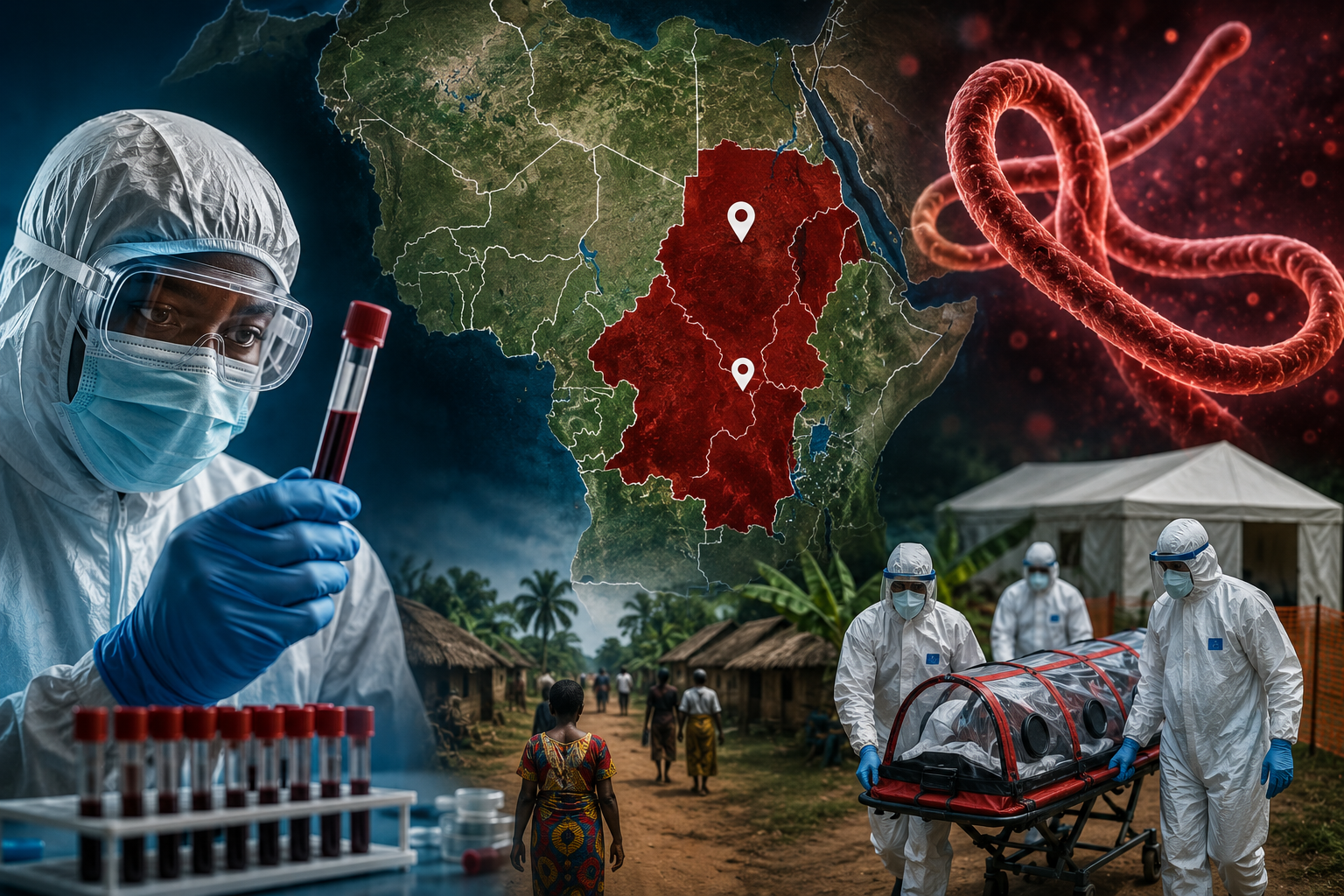
Ebola Outbreak Raises International Concern
The World Health Organization (WHO) has officially declared the Ebola outbreak in the Democratic Republic of the Congo (DRC) and Uganda a global health emergency after the virus spread across borders and killed dozens of people. Health officials fear the outbreak could worsen because the virus involves a rare Ebola strain with no approved vaccine or treatment.
According to the WHO, the outbreak began in eastern DR Congo’s Ituri province before cases appeared in neighboring Uganda. Authorities also confirmed infections in major cities, including Kinshasa and Kampala, increasing concerns about wider regional transmission.
What Makes This Ebola Outbreak Different?
Health experts identified the virus as the rare Bundibugyo strain of Ebola. Unlike the more common Zaire strain, the Bundibugyo variant currently has no approved vaccine or proven treatment. That reality makes containment efforts more difficult for health authorities.
The WHO described the situation as a “public health emergency of international concern,” also known as a PHEIC. The organization uses this designation for serious outbreaks that threaten multiple countries and require coordinated international action.
Officials reported more than 240 suspected cases and nearly 90 deaths linked to the outbreak. Laboratory testing confirmed several Ebola infections in both DR Congo and Uganda.
Why Health Officials Fear Rapid Spread
Medical experts worry that ongoing conflict, population movement, and weak healthcare infrastructure could accelerate the spread of Ebola throughout Central Africa. The outbreak area sits near the borders of Uganda and South Sudan, where thousands of people travel regularly.
Authorities also confirmed Ebola-related cases in urban centers, which increases the risk of transmission. Dense populations and frequent travel make disease control more challenging in large cities.
In eastern DR Congo, armed groups continue fighting for control of mineral-rich territories. Security instability has complicated medical response efforts and slowed contact tracing in several affected communities.
How Ebola Spreads
Ebola spreads through direct contact with bodily fluids from infected people or contaminated materials. Symptoms usually include fever, weakness, vomiting, diarrhea, and internal bleeding in severe cases. Without early treatment and isolation, the virus can spread rapidly among families and healthcare workers.
The WHO urged countries to strengthen border screening, improve emergency response systems, and monitor travelers arriving from affected regions. However, health officials advised against unnecessary border closures because they can disrupt medical aid and humanitarian support.
WHO and Africa CDC Increase Emergency Response
The WHO and the Africa Centres for Disease Control and Prevention (Africa CDC) have started deploying emergency teams and medical supplies to affected regions. Officials hope rapid international cooperation can prevent the outbreak from escalating further.
Health agencies also plan to expand laboratory testing, strengthen infection control measures, and evaluate experimental treatments for the Bundibugyo strain. Scientists continue investigating the source of the outbreak and possible transmission chains.
Ebola Outbreak Revives Global Pandemic Concerns
The new Ebola outbreak has revived global concerns about infectious diseases following recent international health emergencies such as COVID-19 and mpox. Public health experts warn that delayed detection and weak healthcare systems can allow dangerous viruses to spread beyond national borders.
Although the WHO has not classified the outbreak as a pandemic, officials continue monitoring the situation closely because of the virus’s high fatality rate and regional spread.
Importance of Early Detection and Public Awareness
Health experts stress that early detection remains one of the most effective tools for controlling Ebola outbreaks. Quick isolation, community education, and rapid medical response can significantly reduce transmission rates.
Officials also encourage people in affected regions to avoid direct contact with infected individuals and seek medical attention immediately if symptoms appear.
As authorities race to contain the outbreak, global health organizations continue urging governments to support international response efforts before the crisis expands further.
Meta Description (Yoast SEO):
WHO has declared the Ebola outbreak in DR Congo and Uganda a global health emergency after the rare Bundibugyo strain caused dozens of deaths and raised fears of regional spread.