

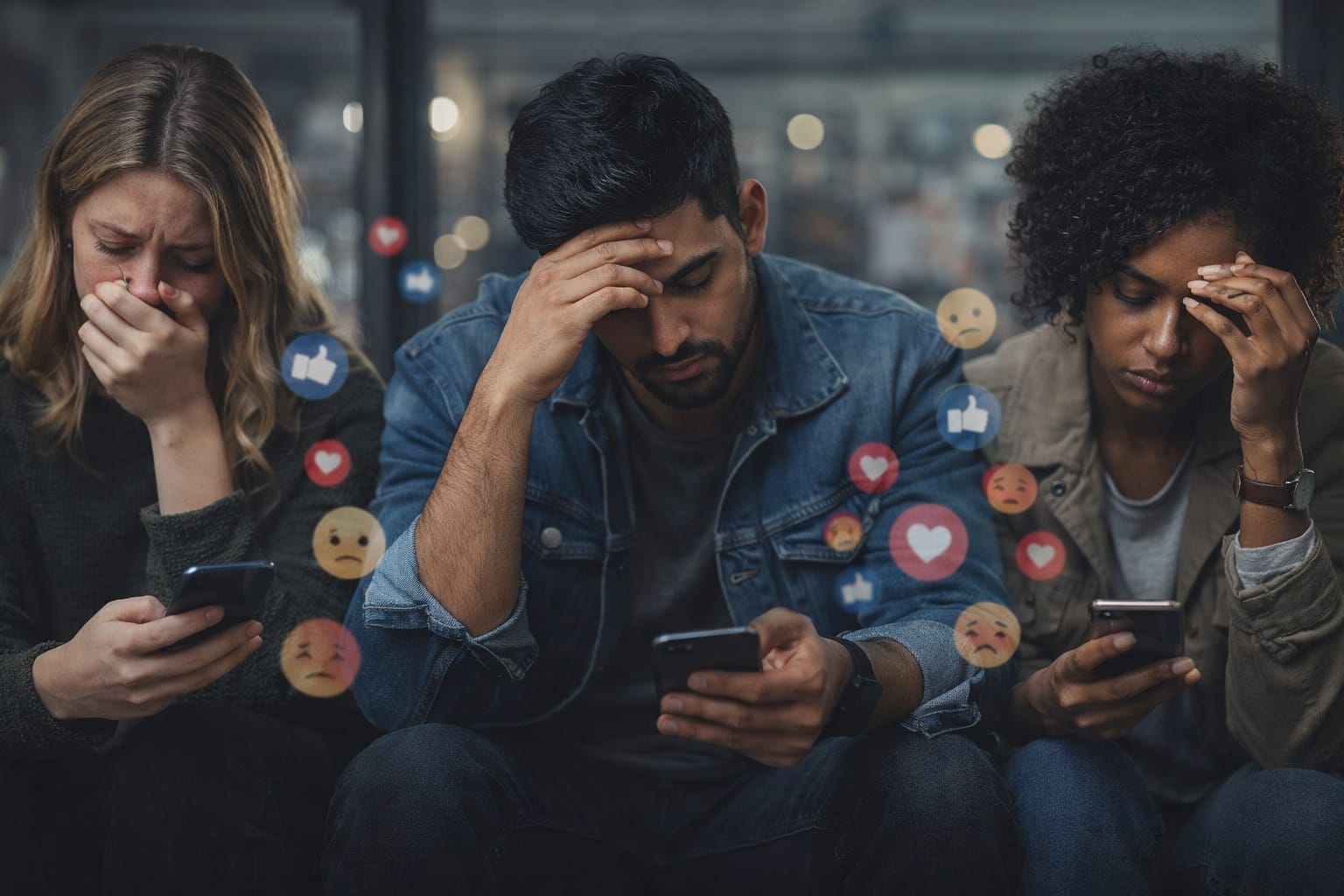
Social media has fundamentally transformed how people communicate, express identity, and perceive social reality. Platforms such as Instagram, TikTok, X, and Facebook allow individuals to share moments, opinions, and achievements instantly with a global audience. However, behind this constant flow of curated content, a less visible phenomenon has quietly emerged: silent struggle.
The term silent struggle refers to emotional, psychological, or mental distress that individuals experience privately while maintaining a seemingly positive or successful appearance online. Many users continue posting smiling photos, achievements, or motivational quotes while simultaneously dealing with anxiety, loneliness, self-doubt, or emotional exhaustion.
In recent years, researchers have increasingly linked this phenomenon to specific patterns of social media use. Although these platforms encourage connection and self-expression, they also intensify social comparison, performance pressure, and emotional isolation. Therefore, understanding silent struggle has become essential for public mental health, digital literacy, and social well-being.
This article explores the phenomenon of silent struggle in the era of social media through a scientific lens. It examines its causes, psychological mechanisms, empirical evidence, and broader social implications while offering practical recommendations for healthier digital engagement.
Social Media as a New Social Environment
Social media no longer functions merely as a communication tool. Instead, it operates as a complex social environment where users constantly negotiate identity, status, and validation. According to global digital reports, billions of users spend several hours per day engaging with social platforms, making them one of the most influential spaces in modern life.
The Illusion of Constant Connectivity
At first glance, social media appears to reduce loneliness by enabling constant interaction. People message friends instantly, join communities, and follow public figures. However, research shows that digital connectivity does not automatically create emotional closeness. In many cases, users experience connection without intimacy.
As a result, individuals may feel socially active yet emotionally isolated. This contradiction forms a core foundation of silent struggle. While interactions occur frequently, they often lack depth, vulnerability, and genuine emotional exchange.
Defining Silent Struggle in the Digital Age
Silent struggle describes an internal conflict that remains largely invisible to others. Unlike openly expressed distress, silent struggle manifests quietly through emotional fatigue, self-criticism, anxiety, or a sense of inadequacy. Social media intensifies this condition by encouraging users to present idealized versions of themselves.
Why the Struggle Remains Hidden
Several factors contribute to silence around emotional difficulties online:
- Social stigma related to mental health
- Fear of judgment or negative feedback
- Pressure to maintain a positive digital identity
- Normalization of an “always being okay” culture
Consequently, many users suppress their struggles rather than share them openly. Over time, this suppression increases emotional burden and psychological distress.
Key Drivers of Silent Struggle on Social Media
Silent struggle does not emerge randomly. Instead, psychological, social, and technological factors interact to create this condition.
Social Comparison and Digital Performance
Social comparison plays a central role in shaping emotional responses on social media. Users constantly encounter carefully curated content that highlights success, beauty, happiness, and productivity. Although people understand intellectually that online content is selective, emotional responses often override rational awareness.
When individuals compare their everyday reality with others’ highlight reels, feelings of inadequacy often increase. Over time, this repeated comparison weakens self-esteem and contributes to chronic self-doubt.
Fear of Missing Out (FoMO)
Fear of Missing Out, commonly known as FoMO, describes anxiety that emerges when individuals believe others experience more fulfilling lives. Social media amplifies FoMO by continuously exposing users to events, achievements, and social gatherings.
As FoMO intensifies, users often feel pressured to stay constantly connected. Ironically, this behavior deepens emotional exhaustion rather than reducing anxiety.
Empirical Evidence Linking Social Media and Silent Struggle
A growing body of scientific research supports the connection between social media use and psychological distress.
Mental Health Outcomes
Large-scale reviews and longitudinal studies consistently associate excessive or maladaptive social media use with higher levels of:
- Anxiety
- Depression
- Perceived loneliness
- Emotional burnout
- Reduced life satisfaction
Importantly, researchers observe stronger effects among adolescents and young adults, who often rely on social media as a primary source of social validation.
Loneliness in a Hyper-Connected World
Paradoxically, individuals with large online networks often report higher levels of loneliness. Researchers explain this phenomenon by emphasizing the difference between quantity of interaction and quality of connection. Passive behaviors such as scrolling, lurking, or consuming content without interaction contribute more strongly to loneliness than active, meaningful engagement.
As a result, users may feel socially visible yet emotionally unseen.
Psychological Mechanisms Behind Silent Struggle
Understanding silent struggle requires examining psychological processes that operate beneath conscious awareness.
Self-Worth and External Validation
Social media platforms rely heavily on visible metrics such as likes, shares, and comments. Although these metrics appear harmless, they subtly shape self-worth. When users externalize validation, emotional stability depends on unpredictable online feedback.
Consequently, fluctuations in engagement often trigger anxiety, disappointment, or self-blame, especially among individuals who closely tie their identity to digital performance.
Emotional Suppression and Cognitive Dissonance
Many users experience a disconnect between their internal emotions and online self-presentation. This mismatch creates cognitive dissonance and increases emotional tension. Over time, suppressing negative emotions intensifies stress and reduces emotional resilience.
Cultural and Generational Dimensions
Silent struggle does not affect all users equally. Cultural norms, age, and social expectations shape how individuals experience and express emotional distress online.
Youth and Young Adults
Younger generations often grow up immersed in digital culture. For many, social media becomes a primary space for identity formation. While this environment offers creativity and connection, it also exposes young users to constant evaluation and comparison.
Studies consistently show that adolescents and young adults demonstrate higher vulnerability to anxiety and self-esteem issues related to social media exposure.
Cultural Expectations of Emotional Expression
In many societies, emotional vulnerability remains stigmatized. Cultural expectations that value strength, success, or emotional control discourage open discussion of mental health challenges. As a result, silent struggle becomes normalized rather than addressed.
Is Social Media Always Harmful? A Balanced Perspective
Although research highlights risks, social media does not function solely as a negative force. Its impact depends largely on how individuals and communities engage with it.
Supportive Communities and Positive Engagement
Online communities that focus on mental health awareness, peer support, and shared experiences help reduce feelings of isolation. When users encounter content that promotes coping strategies, emotional honesty, and recovery, psychological outcomes often improve.
This pattern aligns with the Papageno Effect, which suggests that exposure to hopeful narratives reduces distress and encourages adaptive coping.
Access to Information and Resources
Social media also expands access to mental health education, self-help materials, and professional support. For individuals living in areas with limited offline services, digital platforms often provide crucial pathways to help.
Social and Policy Implications
The rise of silent struggle carries important implications for education, healthcare, and technology design.
Digital Literacy and Emotional Education
Educational systems must prioritize digital literacy that goes beyond technical skills. Effective programs should help individuals:
- Recognize unhealthy comparison patterns
- Understand algorithmic influence
- Develop emotional awareness and self-regulation
- Practice mindful social media use
Responsibility of Technology Platforms
Technology companies play a critical role in shaping digital experiences. Platform design choices can either intensify pressure or promote well-being. Features such as hidden engagement metrics, ethical algorithms, and mental health prompts may reduce harmful effects.
Practical Strategies for Individuals
While systemic change matters, individuals can also adopt healthier digital habits.
Mindful Consumption
Reducing passive scrolling and increasing intentional engagement improves emotional outcomes. Setting boundaries around screen time also prevents emotional overload.
Authentic Self-Expression
Sharing experiences honestly, even selectively, reduces internal dissonance. Authentic expression fosters deeper connection and emotional relief.
Seeking Offline Support
Although online spaces matter, offline relationships remain essential. Face-to-face interaction provides emotional cues and relational depth that digital communication cannot fully replicate.
The phenomenon of silent struggle in the era of social media reflects a complex interaction between technology, psychology, and culture. While platforms promise connection, they often intensify comparison, performance pressure, and emotional isolation.
However, silent struggle does not represent an inevitable outcome of digital life. Through increased awareness, responsible platform design, digital literacy education, and mindful individual behavior, society can significantly reduce its impact.
Ultimately, social media should serve human well-being rather than undermine it. By acknowledging silent struggle and addressing it collectively, we move closer to a healthier and more compassionate digital future.